
Journal
Practical notes on sound, process and the tools we make.
10 articles shown
Inside DERIVA: How a Sound Becomes a Memory
Follow a sound through DERIVA, from its first Fracture to the moment it is preserved, lost or transformed into part of a personal Archive.
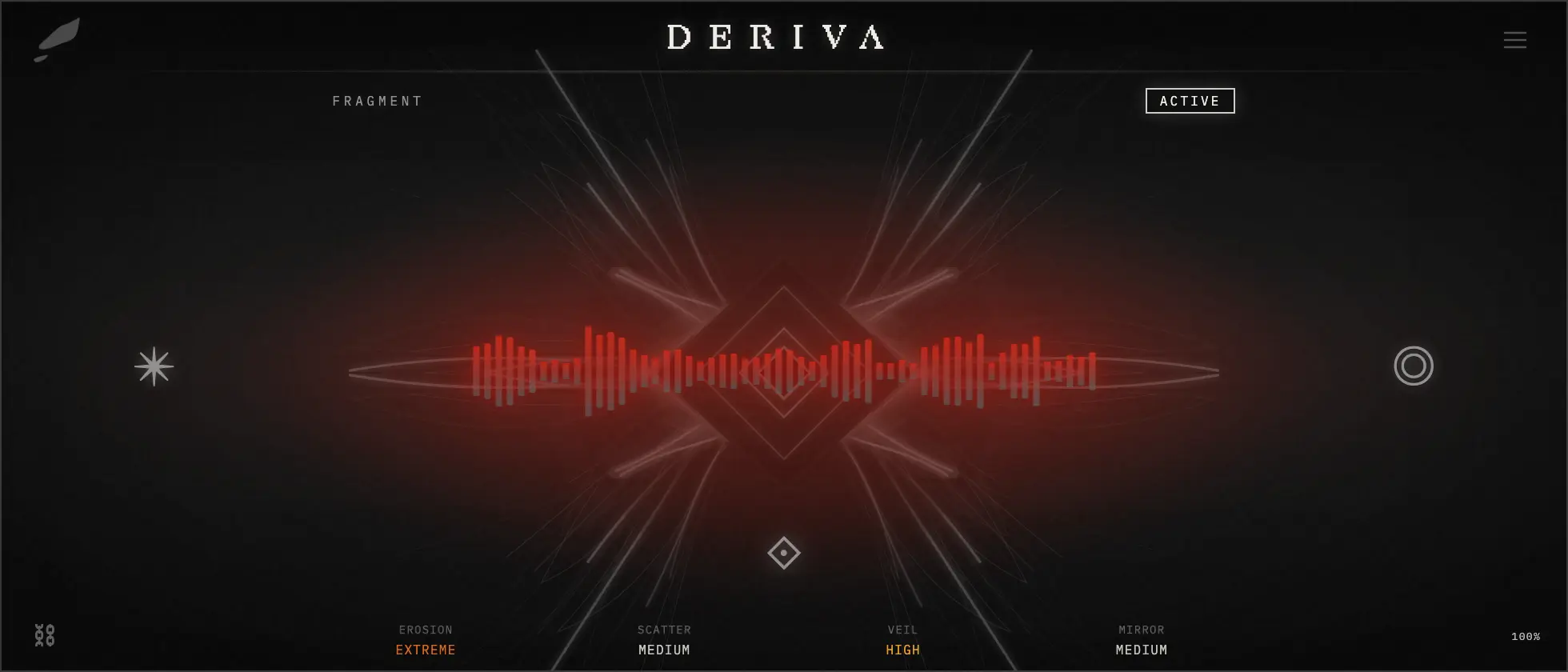
Glitch vs Degradation: Different Ways to Transform Audio
Glitch and degradation often share tools, but they create different kinds of movement, damage and musical expectation.
How to Turn a Single Note into a Complete Texture
Build a moving pad, pulse or atmospheric layer from one recorded note without hiding the source under an uncontrolled effect chain.
How to Turn Vocals into Atmospheric Textures
A practical workflow for turning breaths, vowels and vocal tails into pads, transitions and moving background layers.
When Is a Sound Worth Keeping?
A practical way to decide which generated sounds deserve a place in a project, a library or a personal archive.
From Accident to Arrangement: Giving Texture a Musical Role
A practical way to turn unpredictable textures into transitions, beds, counter-rhythms and structural details instead of leaving them as decorative layers.
How to Turn Drum Hits into Transitions and Atmospheres
A practical workflow for stretching, degrading and resampling drum hits into risers, impacts and atmospheric layers that still belong to the track.
How to Create Degraded Audio Textures
A practical method for turning vocals, drums, synths and field recordings into textured layers without reducing everything to noise.
What Is Generative Audio Processing?
Generative audio processing creates changing effect states from rules and ranges rather than requiring every parameter to be programmed by hand.
Why DERIVA Does Not Use a Traditional Preset Browser
DERIVA replaces a conventional preset list with Fragments, The Keeper and a personal Archive so that discovering and choosing remain part of the instrument.
No field notes match that search.